
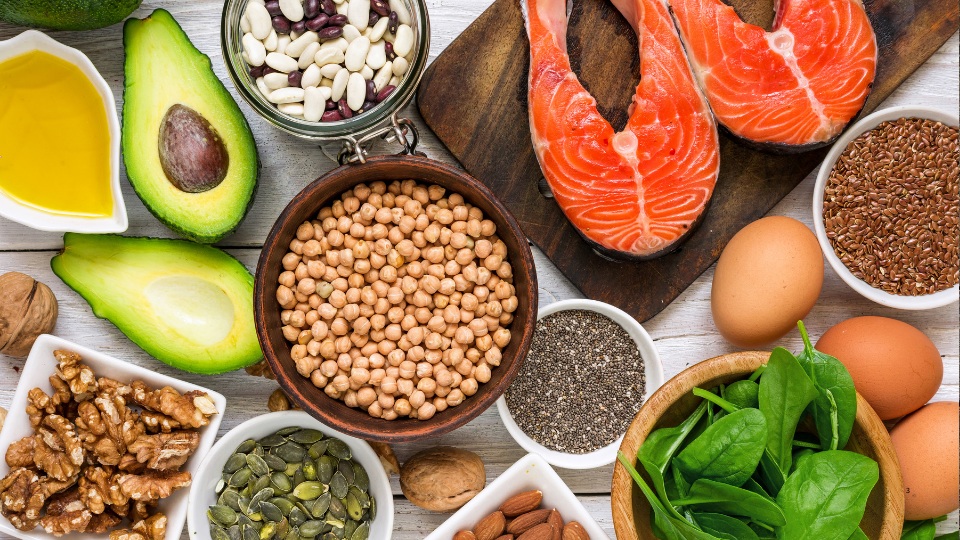
There are various types of fat that our bodies need every day. Some, like omega-9, can be made by our body; others, like omega-3 and omega-6, are essential – meaning our body can’t create them, so we have to get them through diet. You’ve probably heard of these fats before – but which one is best for our heart?
There are three main types of omega-3 fats. Alpha-linolenic acid (ALA) is found in plant foods like walnuts, flax seeds, and chia seeds. Most foods high in ALA are also good sources of dietary fibre.
Docosahexaenoic acid (DHA) and eicosapentaenoic acid (EPA) are found in fish and seafood. Studies show these fats help lower triglycerides, control blood pressure, prevent blood clots, and may reduce inflammation.
Our body can convert ALA (the plant type) into DHA and EPA (the fish type), but the process is slow and inefficient.
Omega-6 fatty acids, coming mostly from vegetable oils, get a bad rap – critics say that they can increase inflammation in the body. However, evidence shows that these fats are a safe way to boost heart health, while leaving inflammatory markers either unchanged or reduced. One study showed that replacing saturated fat in the diet with omega-6 fats lowered heart attack risk by 24%.
Omega-9 fats, also called monounsaturated fats, are in olive and canola oils, avocado, and nuts. While our body can make some omega-9, it’s often not quite enough, so it’s a good idea to get some extra through diet.
Let’s look at what each of these unsaturated fats do in our body:
- Omega-3 fats can help lower triglycerides, reduce risk of heart attack, prevent macular degeneration, protect against fatty liver, and help with skin conditions.
- Omega-6 fats protect against heart attack and stroke, and help with the function of cell membranes in our brain, muscles and other organs. If omega-6 fats replace saturated fat in the diet, they can also help lower LDL (“bad” cholesterol).
- Omega-9 fats help lower inflammation. Olive oil in particular is good for our heart and brain – a small amount every day may lower your cholesterol and reduce risk of heart disease and Alzheimer’s disease.
It’s clear that each of these fatty acids is good for our health – so much so that it’s hard to know which one to focus on!
It’s recommended that we get about five times as much omega-6 in our diet as omega-3. Because omega-6 is so plentiful in our diet, most of us have more than we need, while omega-3 is in short supply. However, rather than eating less omega-6 to correct the ratio, it’s better to keep our intake steady, and instead eat more omega-3 fats. A serving of cold-water fatty fish like salmon, trout or sardines twice a week is enough for most people. Omega-9 fats are easy to get through olive oil, avocado and nuts, so supplements are rarely needed.
Multiple studies over the last several years haven’t shown any benefit to heart health from using fish oil supplements. In fact, there are often side effects, and there may be risks. Check with your doctor before starting a fish oil supplement.
—
All the information provided on this site is for educational purposes only and is not a substitute for professional medical advice, diagnosis, or treatment. My Heart – What To Know is not a healthcare provider or clinic. ALWAYS consult with a qualified healthcare provider regarding any questions you may have about a medical condition. Never disregard professional medical advice or delay in seeking it because of something you have read on this website. If you think you may have a medical emergency, call 911 or go to the nearest emergency room immediately. No physician-patient relationship is created by this website or its use.
This article was sponsored by Novo Nordisk Canada. All content is created independently by My Heart – What To Know with no influence from Novo Nordisk.